Darwin Travel Guide: Australias Tropical Capital
Introduction
Darwin is Australia’s most tropical capital city, the capital of the Northern Territory, and the gateway to the Top End. Known by its traditional Larrakia name Garramilla, meaning “white stone,” Darwin had a population of 139,902 at the 2021 census and is the smallest, wettest, and most northerly of Australia’s capital cities. It sits on a low bluff overlooking Darwin Harbour, surrounded by the Beagle Gulf and the Timor Sea. The city has been almost entirely rebuilt four times, following cyclones in 1897 and 1937, Japanese air raids during World War II, and Cyclone Tracy in 1974. Today, it is a modern and resilient urban centre with a vibrant multicultural character shaped by its proximity to Asia and its rich Aboriginal heritage.
Aboriginal Name and Culture
Darwin’s traditional owners are the Larrakia people, whose name Garramilla refers to the white stone of the rock and sea cliffs found in the area. The Larrakia had established trading routes with Southeast Asia long before European contact, and their songlines penetrated throughout the country. Today, the city’s galleries, museums, and streetscapes are filled with vibrant Aboriginal art. The Museum and Art Gallery of the Northern Territory, known as MAGNT, houses the legendary Sweetheart, a large crocodile specimen, alongside outstanding collections of traditional and contemporary Aboriginal art. Darwin is also home to an incredible street art scene, with large-scale murals created during the Darwin Street Art Festival.
Climate
Darwin has a tropical savanna climate with two distinct seasons. The dry season runs from May to September, during which nearly every day is sunny and afternoon relative humidity averages around 30 percent. The average sea temperature is 25.8 degrees Celsius in July. This is the most popular time for visitors, with clear skies and mild sea breezes from the harbour. The hottest months are October and November, just before the wet season arrives, when temperatures can reach 35 degrees Celsius but the heat index may rise above 45 degrees due to humidity.
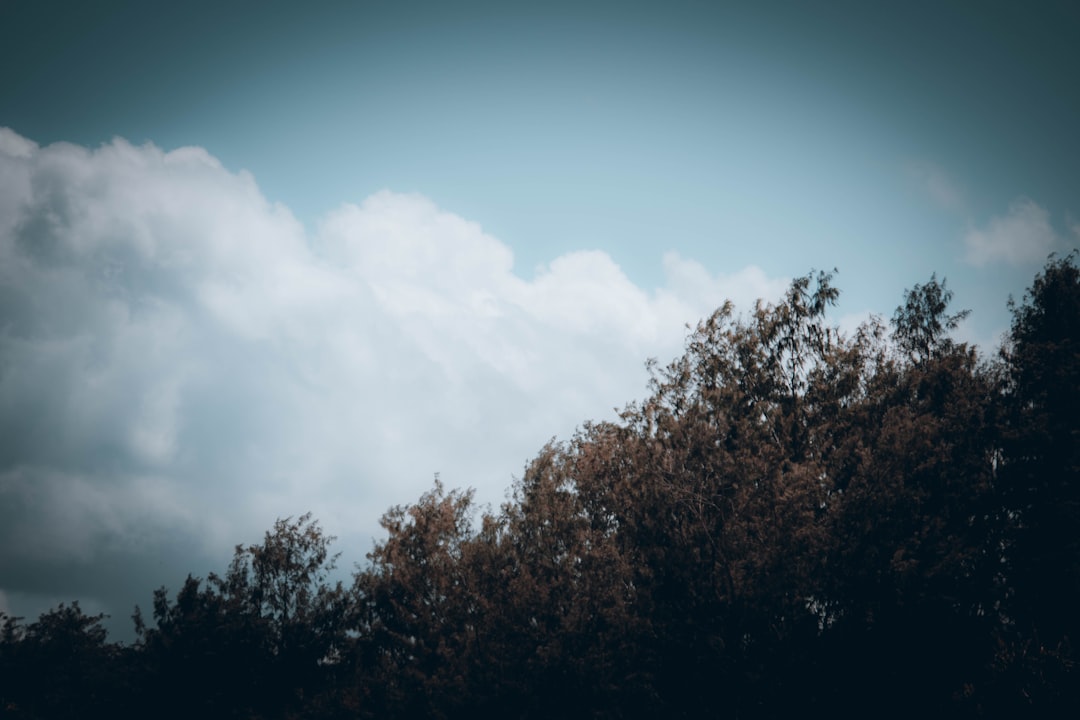
The wet season runs from December to March, bringing monsoonal downpours, spectacular lightning displays, and the possibility of tropical cyclones. Darwin is one of the most lightning-prone areas in Australia. Most rainfall occurs between December and March, with afternoon humidity exceeding 70 percent. It does not rain every day, but most days have plentiful cloud cover. Darwin’s highest daily verified rainfall was 367.6 millimetres, which fell when Cyclone Carlos passed over the area on 16 February 2011. The wet season also brings the famous “build up” period, when temperature and humidity rise dramatically before the monsoon breaks.
Top Attractions
A jumping crocodile cruise on the Adelaide River is one of Darwin’s most iconic experiences. These cruises bring you safely close to wild saltwater crocodiles as they leap from the water for food, showcasing their incredible power and size. For a more adrenaline-fuelled experience, Crocosaurus Cove in the city centre offers the Cage of Death, where you are lowered in a clear acrylic tank into a crocodile enclosure.
The Museum and Art Gallery of the Northern Territory is a must-visit, featuring the preserved 5.1-metre saltwater crocodile known as Sweetheart, the Cyclone Tracy exhibit, and extensive collections of Aboriginal art and artefacts. The Defence of Darwin Experience tells the story of the 1942 Japanese bombing of Darwin, the most serious attack on Australia in wartime. The bombing involved 242 aircraft in two waves, killing at least 243 people and causing extensive damage to the city’s harbour and airfields.
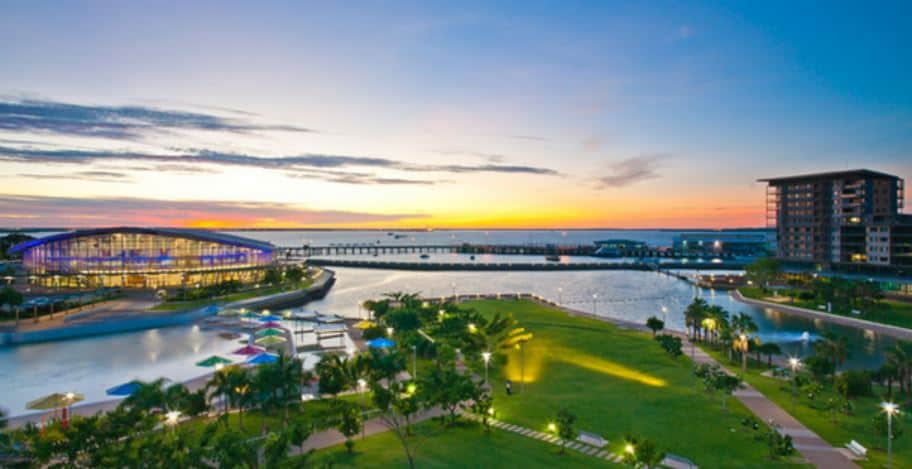
Darwin’s famous Mindil Beach Sunset Markets operate on Thursday and Sunday evenings during the dry season, offering an incredible range of Asian and Australian street food, live music, and handcrafted stalls against the backdrop of a spectacular tropical sunset. The waterfront precinct near Stokes Hill Wharf has undergone a billion-dollar redevelopment and now features a wave lagoon, restaurants, parks, and public spaces. It is a buzzing hub for both locals and visitors.
The Deckchair Cinema is an outdoor cinema that operates during the dry season, showing Australian and international films under the stars. It is a beloved Darwin institution. During August, the Darwin Festival brings two weeks of live music, theatre, dance, and visual art to venues across the city, drawing performers from across Australia and Southeast Asia.
Day Trips and National Parks
Darwin is perfectly located for day trips to some of Australia’s most remarkable national parks. Litchfield National Park is a 90-minute drive south and features spectacular waterfalls like Florence Falls and Wangi Falls, giant termite mounds, and crystal-clear swimming holes. It is the easiest and most accessible day trip from Darwin for swimming and bushwalking. The park has sealed roads throughout, making it accessible with a standard vehicle unlike many other Top End destinations.
Kakadu National Park, a three-hour drive east, is a UNESCO World Heritage site covering nearly 20,000 square kilometres. It requires a full day or an overnight stay to explore properly. The park is famous for its ancient Aboriginal rock art at Ubirr and Nourlangie, wildlife including saltwater crocodiles and Jabiru birds, and dramatic landscapes from wetlands to escarpments. Jim Jim Falls and Twin Falls are spectacular during the wet season but are only accessible by four-wheel drive and are often closed during the summer months.
A less crowded option is the Tiwi Islands, a 20-minute flight or two-hour ferry ride north of Darwin. The Tiwi people have a distinct culture and language from mainland Aboriginal groups, and their art is internationally recognised for its bold colours and patterns. Day tours operate from Darwin and include art centre visits, cultural demonstrations, and a chance to see the famous Tiwi football culture in action.
Eating and Markets
Darwin’s food scene is heavily influenced by its proximity to Asia. The Parap Village Markets on Saturday mornings are a local institution, featuring Southeast Asian street food, fresh produce, and crafts. The Stokes Hill Wharf precinct offers waterfront dining with harbour views and is an easy walk from the city centre. Mitchell Street is the hub of the city’s dining and nightlife. For something truly local, try the iconic Darwin laksa, a spicy coconut noodle soup that reflects the city’s multicultural food culture and is served at markets and cafes throughout the city.
Getting There and Accommodation
Darwin International Airport receives direct flights from all Australian capital cities, including Brisbane (4 hours), Sydney (4.5 hours), Melbourne (4.5 hours), and Perth (3.5 hours). Qantas, Virgin Australia, Jetstar, and Bonza all serve the route. The airport is located just 13 kilometres from the city centre, and a taxi or rideshare takes around 15 minutes.
Accommodation in Darwin ranges from backpacker hostels in the city centre to luxury hotels on the waterfront. The Darwin Waterfront Precinct has several upscale hotels within walking distance of the wave lagoon and restaurants. For a unique stay, the Tiwi Island Retreat offers a remote escape with cultural immersion. Most visitors base themselves within walking distance of Mitchell Street for easy access to dining and nightlife.
Best Time to Visit
The dry season from May to September offers the most reliable weather for outdoor activities, with clear skies, low humidity, and temperatures in the comfortable mid-20s to low-30s Celsius. This is also when the Mindil Beach Sunset Markets, Deckchair Cinema, and most outdoor events operate. The period from April to November has the most sunshine hours, with Darwin averaging 8.4 hours of sunshine daily, the second highest of any Australian capital. For travellers on a budget, the wet season from December to March offers lower travel prices and fewer crowds, though many attractions and swimming spots remain open.
For more Top End and Northern Territory planning, continue with Mindil Beach guide, Lake Alexander visitor guide, and Brisbane travel guide.

Author: Susan
G'day mates! I'm Susan, a feisty Aussie writer with a love for all things quirky and unconventional. When I'm not pounding away at my keyboard, you can find me binge-watching 'The Bold and the Beautiful' (don't judge me), or trying to teach my pet koala how to do the cha-cha. My writing style can best be described as a mix of sass and wit, with a dash of down-under charm. So if you're in the mood for a good time and a good yarn, give my work a read!